Twelve Mornings of Green: A Jam-Jar Advent for Serial Plant Killers
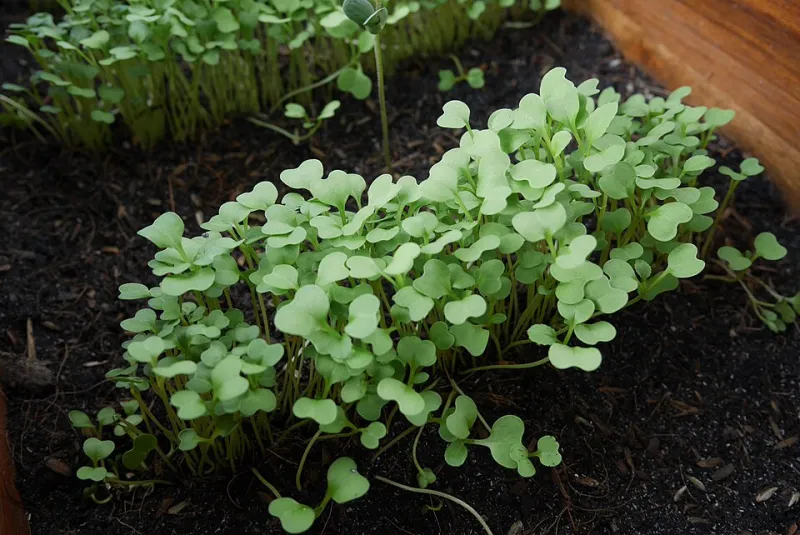
Photo: Zenyrgarden, CC BY-SA 4.0, via Wikimedia Commons
Every December I buy a supermarket basil plant. Every January, I throw it away. The leaves go black, the stems go woody, and the pot sits beside the bin looking like an accusation. If that sounds familiar — if houseplants come to your home to die politely and without fuss — here is a much gentler festive gamble: a jam jar, a scrap of muslin and a cheap bag of seeds, set up to hand you a small green snip every morning of Advent.
This is not a complicated project. That is rather the point of it. It is the sort of thing plenty of us started doing during the 2020 lockdowns and simply never stopped, because a windowsill of green in the darkest month does something quietly good to a person's head.
Why a jar beats another supermarket herb pot
Supermarket herb pots are pushed hard and fast in heated glasshouses, and by the time they reach your kitchen they are root-bound, hungry and still expecting Mediterranean sunshine in June. A December windowsill offers them the exact opposite: weak light, dry radiator air and a draught from the balcony door. Within ten days you have a pot of compost and a low-grade sense of failure.
Microgreens ask for almost nothing. They do not need to flower, fruit or survive to February — you eat them while they are still seedlings, which conveniently removes the bit where you would normally kill them. A bag of dried marrowfat peas from the corner shop, the kind sold for soup, will cost you under a pound and grow you a fortnight of garnish. That is a far better festive bet than a £2.50 pot of forced basil that has already given up hope.
The kit, which costs less than a tub of chocolates
- A clean jam jar, label soaked off
- Two centimetres of ordinary multi-purpose compost
- A square of muslin, or a foot cut from an old pair of tights
- A rubber band
- A saucer
- A spray bottle, or a rinsed-out washing-up liquid bottle
- Seeds
If you own a jar, you are in for about two quid. One bag of seed will do five or six jars across the winter, which matters when you are buying for a calendar rather than a craving.
Which seeds actually bother in December light
A UK windowsill in midwinter gets perhaps six or seven hours of thin, low-strength light — less if you face north. So skip anything that wants to become a real plant. You want seeds that germinate fast and are eaten as seedlings.
- Dried marrowfat peas. Ten to fourteen days to a snip, and the best of the lot. Cut them an inch above the compost and most will give you a second flush a fortnight later.
- Radish. Five to seven days. Peppery, quick, with pinkish stems that look genuinely cheerful against a grey sky.
- Calabrese or broccoli sprouting seed. Seven to ten days, mild and crunchy.
- Mustard, including the red varieties. Five to eight days. Hot enough that a small pinch does real work in a sandwich.
- Cress. Five days. Cheap, idiot-proof, and a good first jar if you are nervous.
- Sunflower. Ten to twelve days, nutty and substantial, but it wants your brightest sill.
What to avoid: basil, coriander and parsley. They will germinate, sulk, and then simply stop. Not their fault. Wrong month.
The soggy-jar problem, and how to dodge it
The dreaded smell comes from seeds sitting wet with no air around them. It is not bad luck, it is drowning. The fix is unglamorous and takes about thirty seconds a day.
- Use the muslin as a lid, not a sieve. Stretch it over the jar mouth and band it tight. Air moves, fruit flies do not.
- Water from below or from a spray. Sit the jar on a wet saucer for a minute, or mist the surface. Never pour a puddle over the seeds.
- Drain properly. Let the saucer dry out between waterings. Compost should feel like a wrung-out flannel, never like soup.
- Tilt the jar. Rest it at an angle, propped on a mug or a rolled tea towel. Runoff collects at the low side away from the seeds and the air keeps moving.
- Sow thinly. A pinch, not a handful. Crowding is the single biggest cause of a whiffy jar.
- Keep it off the cold glass at night. If the jar sits against a single-glazed pane, condensation forms inside and stays there. Move it back a few inches after dark.
- Know the difference between roots and mould. Fine white fuzz around the base of a stem is usually root hair, and perfectly normal. Fluffy grey-blue patches on the seeds themselves are not — pick those out, ease off the water, and carry on.
The twelve-day rhythm
Advent Sunday falls on 29 November in 2026, so get your first jar going on 27 November. Then start a second on 2 December and a third around 7 December. Staggering three jars means you are never facing a fortnight of nothing followed by a jungle you cannot eat fast enough. Each jar gives roughly seven to ten days of snipping from the point the stems stand upright and the first proper leaves open.
Harvest with kitchen scissors, snipping an inch above the compost line. Rinse the greens in a sieve under the cold tap, shake dry, and use them the same morning — that is half the pleasure.
Where the green actually goes
Eggs on toast. Soup that looks beige. A cheese sandwich that needed a lift. The Christmas Day turkey sandwich at four in the afternoon, when the kitchen is a wreck and nobody wants to cook. A handful of pea shoots on top of a bowl of pasta turns a Tuesday-night default into something you sit down for properly.
Cost per snip works out at pennies, and unlike a supermarket pot it never looks at you reproachfully. Worst case, a jar goes over and you tip it into the food waste and start again on Thursday. That is a very forgiving kind of gardening — which, for anyone who has killed a peace lily, is exactly what December calls for.