The Corner That Thrives and the Corner That Sulks: Mapping Your Balcony's Micro-Climates
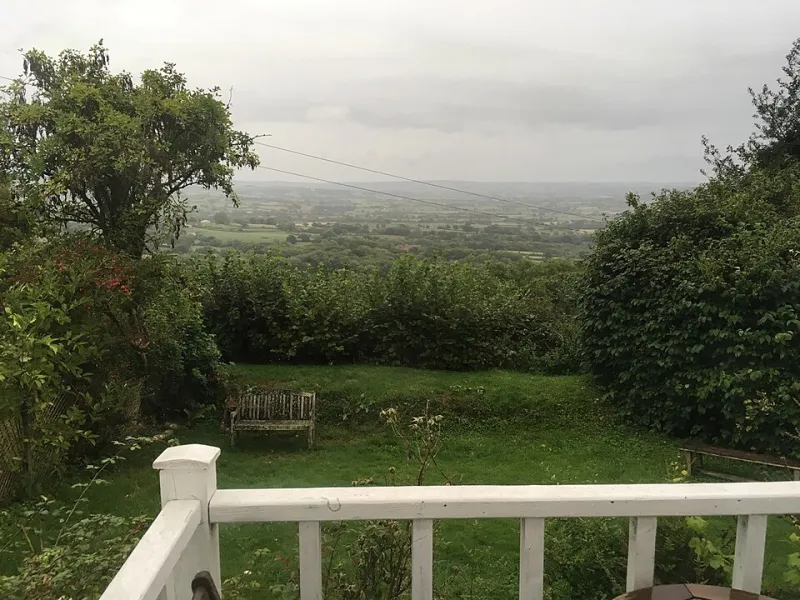
Photo: David Lally , CC BY-SA 2.0, via Wikimedia Commons
Every balcony has one. A corner where the herbs look magnificent and slightly smug, and another where a supposedly identical plant sits there, brown at the edges, refusing to engage. For a long time I assumed I was doing something inconsistent — overwatering one, ignoring the other, some failure of attention.
Then I put two cheap thermometers out for a week and discovered a 4°C difference between two spots less than two metres apart. That explained a lot.
Why identical pots behave differently
A balcony is not one growing environment. It's a handful of small ones jammed together, shaped by wind, sun angle, rain, and the materials around them. Growers call these micro-climates. On a domestic balcony they're exaggerated, because everything is scaled down and close to a hard surface.
Four things do most of the work: wind, rain, stored heat, and reflected light. Get a feel for those and you can stop guessing where things should go.
Wind: the invisible pruning shears
Wind speeds rise sharply with height, so a third-floor balcony gets a considerably rougher ride than a garden. Add buildings and you get funnels between blocks and energetic little vortices at the ends of balconies, right where the railing stops.
The telltales are easy to read once you know them. Leaves scorched and brown on one side only. Stems leaning consistently in one direction. Compost bone dry within a day of watering. A plant that looks fine in July and shredded by February.
Fixes: a permeable windbreak, not a solid one. A bamboo cane screen or a couple of layers of horticultural fleece tied to the railing slows the wind without creating the violent turbulence a solid board produces. Cluster pots together so they shelter each other, and keep the most exposed pots low and heavy rather than tall and light.
Rain shadows
The balcony above yours is a roof. So is a deep overhang, and so, to a lesser extent, is a big pot standing in front of a smaller one. Some spots on a rainy week get properly soaked; others get barely damp.
You can spot a rain shadow by scratching half a centimetre into the compost after a wet night. If it's dry underneath a dark, damp surface, that pot is being watered by nobody. Pots tucked tight against a wall can go either way — sometimes sheltered, sometimes catching a drip line off the roof.
Fixes: water by weight rather than by habit (pick the pot up; you'll learn fast), and rotate pots a quarter turn weekly so the dry side faces the weather.
Stored heat, and the railing problem
Brick, concrete and stone absorb warmth during the day and release it slowly at night, which is why the wall of a building can be a couple of degrees warmer than open air at dawn. A south- or west-facing wall is your friend in November. So is a bit of paving or a brick parapet.
Metal is the opposite. A steel railing gets properly cold, conducts heat straight out of anything touching it, and a pot pressed against it is more likely to freeze through. Stand pots on feet or tiles, and leave a hand's width between pot and railing.
The two-week mapping method
You need one max-min thermometer — the kind that records overnight lows, about the price of a couple of coffees — and a bit of patience.
Pick three or four candidate spots: the sheltered wall corner, the exposed end, the middle, and the shady bit by the door. Move the thermometer round on a rota, a few days per spot, and jot down the high and low each evening. It doesn't need to be scientific. It needs to tell you which spot is coldest at 4am.
Then, on a properly windy day, go and stand in each spot for a minute. Feel it on your face. Tie a strip of fleece or ribbon to the railing and watch where it flaps hardest. Finally, weight a square of kitchen roll with a pebble in each location and see which dries first — that tells you about wind and warmth together.
Reading the map
You'll usually end up with something like this.
The warm, sheltered wall corner is your best real estate. Tender herbs, anything overwintering, the plants you actually care about. It's also the spot most likely to be dry, so keep an eye on it.
The exposed windward end is for the hard cases: hardy winter salads, tough herbs, spring bulbs in grit, anything that doesn't mind being battered.
The rain shadow under the overhang needs you personally, all winter. Gritty, free-draining compost and drought-tolerant plants will cope. Thirsty plants will not.
The cold, dark corner by the door is where I'd honestly stop pretending. Store the watering can there, or a pot of bulbs that only needs to look cheerful in March.
Before the first hard frost
Do the moving now rather than in a panic when the Met Office puts out a warning. Raise pots onto feet so they drain and don't sit in a frozen puddle. Group them together for mutual shelter. Wrap the most vulnerable in bubble wrap or hessian, leaving the drainage holes clear. Move the tender things inside. Push a handful of grit round the crowns of anything borderline.
And if a windbreak needs drilling into anything structural, check your lease or ask the freeholder first. A cheap bamboo screen tied on with cable ties will do the job just as well and won't cause an argument.
The sulky corner, revisited
Sometimes the plant is not the problem and the place is not the problem — the pot is. Small pots dry out and freeze solid much faster than large ones. If you have an unforgiving spot and you want to grow something in it anyway, go up a pot size and it'll buy you a degree or two of grace.
Map the balcony once, properly, and you'll use that knowledge for years. It's the least glamorous thing in small-space growing, and quite possibly the most useful.