Twenty-Five Quid of November Cheer: An Afternoon Balcony Refresh You Can Copy

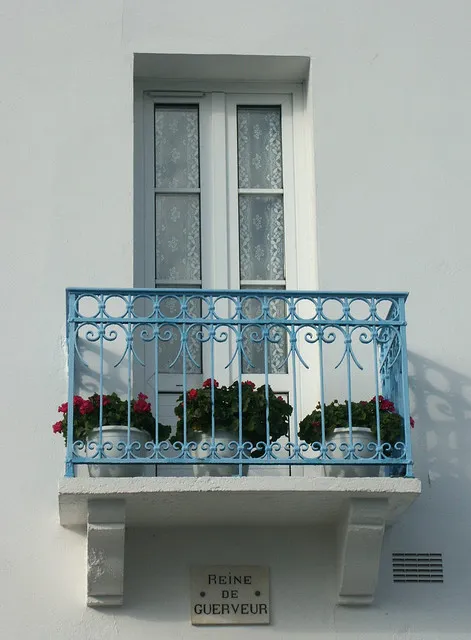
Photo: David Smith , CC BY-SA 2.0, via Wikimedia Commons
There is a specific kind of November afternoon when you look out at the balcony and see a tray of regrets: half a bag of wet compost, a geranium that has given up, a saucer full of rainwater and a single sprig of parsley hanging on out of sheer spite. It is too late for bedding plants and too early for anything else. But it is not too late for a decent afternoon's work and about twenty-five pounds.
This is the refresh I do most years, and it is deliberately unglamorous. No drilling, no wiring into the flat, nothing that needs a landlord's permission or a dry weekend in April. Just crates, evergreens, warm light and a bit of tidying.
The rules before you start
Keep it cheap, keep it reversible, and keep it light. If you rent, or your building has rules about balconies, check before fixing anything to the railings. Never block a fire escape route. Battery lights only, and no real candles near fabric or dry foliage. And remember that wet compost in November is heavy — pots go on the floor or on a sturdy crate, not on a dangling bracket.
Step 1: The clear-out (twenty minutes, free)
This is the step that does most of the work, and it costs nothing.
- Tip out saucers of standing water. That alone halves the gloom.
- Pull spent annuals and anything brown and crispy. If you have a garden or a council green waste bin, bag it; do not bung it in with next year's tomatoes.
- Wipe pots and the windowsill ledge with warm soapy water. A surprising amount of the 'shabbiness' is actually grime.
- Sweep. Then sweep again, because November leaves are relentless.
- Move anything that is genuinely still alive to the front where you can see it — rosemary, thyme, sage, ivy, a fern that has quietly thrived on neglect.
By the end of this stage the balcony already looks a third better. Everything after this is decoration.
Step 2: Work out what you are dealing with (ten minutes)
Stand out there with a tea and notice the wet corner, the wind tunnel by the drainpipe, and the patch that never gets sun after two o'clock. Whatever you buy goes in the spots that suit it, not the spots that photograph well.
Step 3: The £25 charity-shop haul
Here is roughly what I spent, and where it came from. Charity shops vary wildly, so treat the prices as a guide rather than a promise.
| Item | Where | Cost |
|---|---|---|
| Two wooden crates or a wine box | Charity shop / off-licence | £6 |
| Three mismatched ceramic pots | Charity shop | £4 |
| Two tough evergreens | Supermarket plant shelf or garden centre bargain bench | £7 |
| Two sets of warm-white battery fairy lights | Poundland, B&M or similar | £6 |
| Small second-hand mirror or picture frame | Charity shop | £1 |
| Tea and a biscuit | Essential | £1 |
Total: £25. If you already own crates or a spare mirror, you have money left over for a third evergreen, which is never a bad idea.
Step 4: Crates into a shelf
Lean or stack the crates on their sides against the wall. Line them with an old compost bag or a bit of hessian to stop the wind stripping everything out, then stand pots inside rather than filling the crate with soil. Pots are lighter, easier to swap around, and you can lift them out for watering.
Secure anything taller than knee height with a bungee cord or a couple of ties to something solid — not because it will definitely blow over, but because the one weekend you are away is the weekend it will.
Step 5: Evergreens for grit
This is the heart of it. In November you are not buying colour, you are buying structure and scent, and you want things that shrug off wind and wet.
- Skimmia — neat, glossy, happy in a pot, and the buds carry you through to spring.
- Sarcococca — winter box. Small, dark and quietly fragrant in December and January, which is worth every penny.
- A hebe or a small euonymus — tough as old boots and holds its shape.
- Carex or another ornamental grass — moves in the wind, so the balcony looks alive rather than frozen.
- Ivy — free, if you know anyone with a fence.
Pot them in a gritty mix, raise the pots on feet or broken tiles so water drains, and then leave them largely alone. Wet feet kill more balcony evergreens than cold ever does. Cyclamen and winter heather look lovely in November but are essentially cut flowers, so buy them as a treat rather than a plan.
Step 6: Warm light without wiring
Warm white, not cool white — cool white makes a balcony look like a car park. Run one set along the back wall or threaded through the crate shelf, and put the battery box somewhere sheltered, taped or clipped up under cover so it survives the rain.
Add a mirror at the back if you found one. It bounces the little light there is and makes a small balcony feel twice the size. Jam jars with battery tea lights work beautifully on a table, and a small lantern by the door means you can actually find your keys in the dark.
Step 7: The finishing touches
A doormat that is not sodden. A folded blanket in a crate. A tin of biscuits that lives outside on purpose. The aim is a balcony you will step onto for five minutes with a mug, even when it is grim — because the five minutes is the entire point.
The before and after
- Before: wet saucers, dead annuals, a tangle of old string, one lonely pot.
- After: crates at two heights, three evergreen pots with grit on top, warm light along the wall, a mirror catching the last of the afternoon, and somewhere to stand with a cup of tea.
Total time: an afternoon. Total spend: £25. Total plants harmed: none, and one rosemary rescued from the bin.
What I would skip next time
Real candles, which blow out instantly and worry me. Tinsel, which looks tired by the fifth of December. Spray-painted pots, which chip and look worse than the original. And any 'winter colour' plant that needs more light than a November balcony can possibly offer.
November cheer is not about faking spring. It is about cleaning up, adding something green and tough, and getting the light right. Twenty-five quid and an afternoon will do it.