The Colander Christmas Hustle: Four Quid, a Fistful of Bulbs and a Balcony Centrepiece That Drains

Photo: kitchen colander christmas planter balcony winter greenery bulbs ribbon, via befca5fa.delivery.rocketcdn.me
Some Christmas balcony projects are about buying more. This one is about looking at the kitchen rack and seeing a planter with holes already in it. As of 10 November 2026, my balcony is somewhere between autumn and full tinsel, and the thing holding the middle ground together is a battered metal colander that cost less than a coffee.
It is not a clever hack in the sense of being complicated. It is a clever hack in the sense that a colander already does the one thing most small-space planters fail at: it lets water out. No drilling, no saucer full of soup, no compost turning into a soggy brick. Add a handful of bulbs, some supermarket greenery and a ribbon tied with British weather in mind, and you have a festive centrepiece that earns its place on a balcony rather than just sitting there looking expensive.
Why a colander makes sense on a small balcony
A colander is basically a lightweight, handle-equipped plant pot with drainage holes built in. That matters more than it sounds. On a balcony, compost can stay wet for days after rain, especially in a pot with a blocked drainage hole or a tray that never gets emptied. Bulbs hate that. So do rosemary, ivy and most of the winter greenery we tuck around them.
The holes give you free drainage and a bit of airflow. The handles give you something to tie a ribbon to, which is much easier than wrestling florist wire around a smooth ceramic pot in a force-five gust. And because a colander is shallow, it suits dwarf bulbs and small winter plants rather than a great looming shrub. It also weighs very little before planting, which is a quiet bonus for anyone who has ever lugged a wet terracotta pot across a balcony.
The one compromise is that compost can escape through the holes. Line the colander with a piece of coir basket liner, a moss sheet or even a couple of layers of old coffee filter paper. Leave the drainage holes doing their job, but stop the growing mix from washing out onto the balcony floor. Sit the whole thing on a shallow tray or saucer when it is on a table or ledge, and empty that tray after heavy rain so it does not become a mini pond.
The four-pound shopping list
Prices will wobble depending on where you shop, but this is the spirit of the thing:
- A metal colander from a charity shop or cupboard: £1 to £2
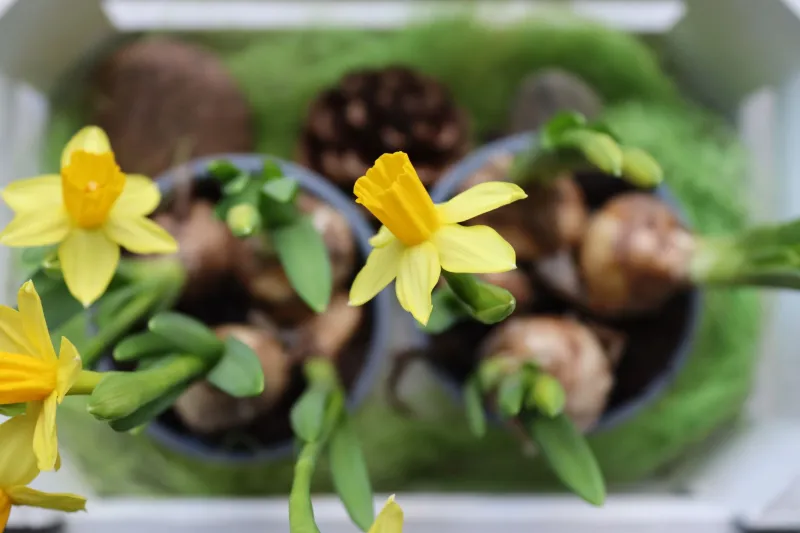
- A small bag of dwarf bulbs, such as narcissus Tête-à-Tête or muscari: around £2
- A supermarket bunch of rosemary, eucalyptus or festive foliage: £1 or less, or free offcuts from a friend
- Ribbon or cotton tape from a drawer: effectively free, or 50p from a haberdashery
- Peat-free multipurpose compost and a handful of grit: likely already in the shed
That puts the build at roughly £4 if you are starting from scratch with a cheap colander and a small bulb bag. If you already have compost, ribbon and a colander you never use, it is closer to £2. The point is not to be smug about the price. The point is that festive cheer on a small balcony does not have to arrive in a plastic sleeve from a garden centre.
The build, step by step
First, pick your colander. A metal one with two handles is ideal. Avoid anything so large that it dwarfs the balcony table, and avoid a flimsy plastic one that will crack in the cold. Give it a wash and let it dry.
Next, line it. Press a circle of coir liner or moss into the base and up the sides, leaving the holes clear enough to drain. If you are using moss, soak it first and squeeze it out. You want a lining that holds compost but does not seal the colander like a bucket.
Then add a shallow layer of compost mixed with a little grit. This is a small planter, so keep the mix light rather than rich and heavy. Place your bulbs pointy end up, close but not touching. In a colander this size, a dozen dwarf narcissus and a scatter of muscari is plenty. Cover them with another couple of centimetres of compost, leaving a small gap below the rim so water does not immediately spill over the side.
Now comes the part that makes it look festive before the bulbs have done anything at all. Tuck winter greenery around the edge and over the surface: short sprigs of rosemary, small ivy trails, a few stems of eucalyptus, holly leaves if you have them, or offcuts from a supermarket wreath bunch. Keep it loose. A tight, formal dome looks odd in a colander. A slightly rumpled, woodland-ish top suits it.
Finish with moss pressed gently around the greenery. This covers the compost, holds a little moisture and makes the whole thing look intentional rather than like a kitchen utensil with dirt in it.
The planting mix that carries November into December
The honest truth is that dwarf bulbs planted in November are not going to flower by Christmas. They are a promise, not a display. The festive look comes from the evergreen cuttings, the moss and the ribbon. Then, as December 2026 rolls on, the bulbs sit under the surface doing their cold-work, ready for a much later show.
If you want a bit more colour in the meantime, add one small winter pansy or a mini cyclamen in the centre. Buy it as a single pot rather than a tray, tease it out gently and tuck it among the bulbs. It will not last forever, but it will bridge the gap between festive greenery and the first proper bulb shoots.
Use peat-free compost, water sparingly and keep the colander outdoors in a sheltered spot. A balcony is perfect because the bulbs need cold. Do not bring the planter into a warm living room and expect it to behave; it will sulk, rot or send up pale, stretchy shoots. If a hard frost is forecast, move it against a wall rather than inside.
Wind-proofing the ribbon
This is where many balcony Christmas projects come unstuck. A big floppy bow looks lovely in the shop and tragic after one night of British wind. Keep it small, tie it through the handles rather than around the compost, and secure the knot with a little florist wire or a cable tie underneath. Use cotton tape, outdoor ribbon or a tartan ribbon rather than thin paper ribbon that turns to mush in the rain.
Leave the tails short. Long tails whip about, catch on railings and end up looking like wet spaghetti. If your balcony is properly exposed, take the ribbon off during gales and put it back when the weather calms down. A colander planter is sturdy; a decorative bow does not have to be.
Aftercare without fuss
Check the compost every few days rather than watering on a schedule. If it feels dry a couple of centimetres down, give it a drink and let it drain. If it is soggy, move the colander under cover for a few days. Squirrels and mice may investigate the bulbs, especially in a shallow planter, so a loose layer of moss or a temporary circle of chicken wire over the top can help.
By the time December 2026 is in full swing, the colander should be sitting on a balcony table or wide ledge, looking like a small, cheerful, slightly scruffy woodland arrangement. It will not have cost much. It will not need drilling. And when the rain comes, as it will, the holes will do exactly what they were made for.
That is the quiet joy of small-space growing: you do not need more room, more money or a perfect balcony. Sometimes you just need to look at the kitchen rack and see a planter that already knows how to drain.