Cardboard, Compost and a Small November Gamble: Starting Sweet Peas on the Sill
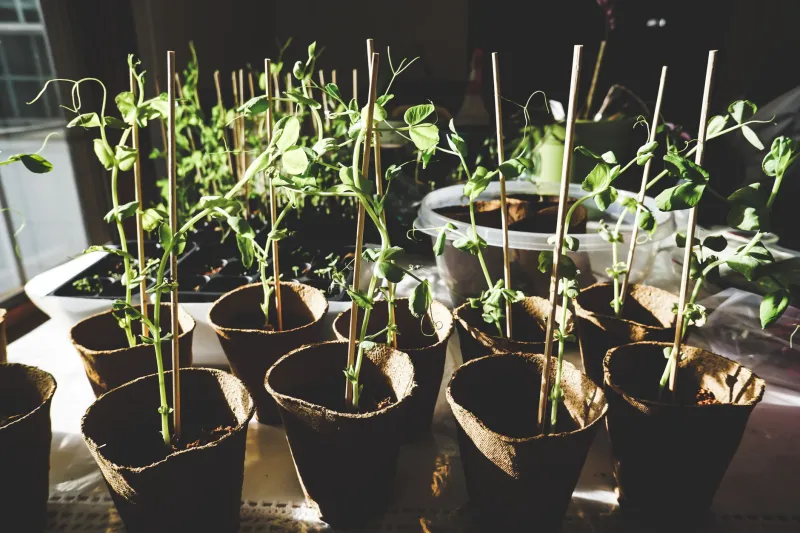
Every November I do the same slightly ridiculous thing: I save the cardboard tubes from the loo rolls, line them up along the kitchen windowsill like tiny chimneys, and sow sweet peas into them. It costs about four quid. It takes twenty minutes. And it gives me something to fuss over between now and Christmas that isn't the boiler or the news.
This is not a grand horticultural scheme. It's a small, cheerful punt on spring — and if you've got a windowsill that gets a bit of light and a balcony that gets a bit of sun, you're already equipped.
Why bother sowing in November at all?
Sweet peas are hardy annuals. In the ground, a November sowing means the roots get going while the soil is still warm, the plants sit tight through the cold, and then they hit March running. You get earlier flowers, sturdier growth and — the bit nobody tells you — a longer picking season before the July heat makes everything sulk and go to seed.
Indoors on a windowsill, you're faking that same head start. The roots develop in the cool, bright weeks before the year turns. You're not chasing flowers in January. You're building a root system quietly, out of sight, like saving up coppers in a jar.
The other reason is less practical and more honest: November is grim, and green things help. A row of sprouting tubes on the sill is cheap, unglamorous therapy.
The kit, and what it actually costs
- Tubes. Six to eight loo rolls, or the inner from a kitchen roll cut into three. Squash them slightly into a hexagonal-ish shape so they hold their form — a round tube rolls about and the compost escapes.
- Compost. Any peat-free multipurpose. Fill the tubes and firm gently; you want damp, not sloppy.
- Seed. A cheap, scented, old-fashioned variety is fine. 'Cupani' is the classic, 'Matucana' if you like your history, or whatever the garden centre has on a spinner rack for under £3. You do not need a £7 packet for an experiment.
- A tray or a shoebox lid to stand them in, so watering doesn't redecorate your sill.
- Labels. A lolly stick and a pencil.
Total: under a fiver if you already own a bag of compost, which you almost certainly do.
The method, in the order I do it
- Stand the tubes upright in the tray, snug against each other so they prop each other up.
- Fill with compost to about 2cm from the top, tap the tray down to settle it.
- Push two seeds in per tube, about 1cm deep. Two, because germination is not a promise.
- Water from the top with a small jug, slowly, until it runs out the bottom. Then don't water again until the surface looks dry.
- Put them somewhere bright and cool-ish — a windowsill above a radiator is a bad idea, a windowsill in an unheated spare room is ideal.
- Wait. Ten to twenty-one days is normal. Anything faster is a bonus.
Once they're up, pinch out the growing tip when the plant has two or three pairs of leaves. It feels brutal. Do it anyway — it makes them branch instead of turning into one sad spaghetti strand.
The honest bit: what goes wrong
I have form here, so let me be straight with you.
They get leggy. November light in the UK is feeble. Even a south-facing sill gives you stretched, pale seedlings by mid-December. Turn the tubes a quarter turn every couple of days, keep them as cool as you can, and accept that a bit of gangliness is survivable — you'll bury the stems deep when you plant out anyway.
Damping off. Little seedlings keel over with a pinched, waterlogged stem base. It's usually too much water and too little air. Water less than you think, and don't cover them with a lid once they're up.
Mice. If you're in a flat with a mouse problem, sweet pea seeds are basically bar snacks. A steep-sided tray and a bit of netting helps.
They outgrow the sill in January. This is the real risk. If they get too big too early, you'll be shuffling them about like awkward houseguests. It's fine. Pinch them again and keep them cool.
What a small balcony can realistically expect
Let's not oversell it. A couple of pots on a railing isn't going to give you armfuls for the house every week. What you can genuinely bank on from six or eight plants is a decent handful of scented stems from late May into July — enough for a jam jar on the table and a few to give away.
Sweet peas want sun and something to climb. On a balcony, that means a cane wigwam in a decent-sized pot (30cm plus), or an obelisk, or a run of netting against a railing. They're thirsty and greedy, so a bit of tomato feed from May helps no end.
And be honest about which way you face. A north-facing balcony will give you leaves and hope, not flowers. That's still worth the four quid, in my book, but plan accordingly.
Why February is the payday
Here's the thing that makes the November gamble worth it. Around the middle of February, when the garden centres are still selling bare shelves and everyone else is only just thinking about seed packets, you'll have plants with roots filling their tubes and shoots reaching for the glass.
That's the head start. Those plants go out in March in the mild south, April further north, and they'll flower three to four weeks ahead of a spring sowing. On a short balcony season, three extra weeks of flowers is the entire point.
The bet part
I keep a scrappy note in the back of the seed tin: sowing date, first flower date, how many stems I actually picked. It's not science. But it turns a windowsill of loo rolls into a proper little wager with the weather — and next November, when the tubes pile up again, I'll know whether to double down.
Sow a few. It's a fiver, it's November, and there's not much else to do.