A Bowl of Quiet: The Ledge-Sized Pond That Makes November Feel Less Grey
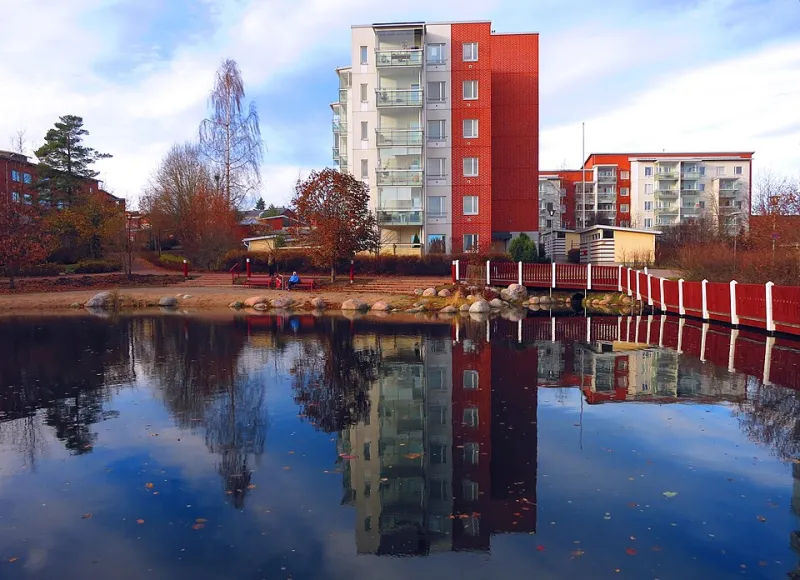
Photo: Maasaak, CC BY-SA 4.0, via Wikimedia Commons
November has a way of making a balcony feel like a waiting room. The pots are sulking, the light is thin, and everything looks a bit damp and unresolved. This is exactly the moment when a small patch of water earns its place. Not a proper wildlife pond, not a project with a pump and a filter and a manual, but a washing-up bowl with a few stones in it. A ledge-sized pond, really. And it might be the cheapest bit of cheer you add to your balcony this month.
Why a bowl, and why now
A pond in miniature does something that pots and planters cannot: it reflects. On a grey day it holds whatever sky is available and doubles it. On a bright one it throws light about like it is showing off. It also brings movement without electricity — a ripple when the wind gets under the railings, a bird landing on a stone, a leaf drifting from one side to the other.
The washing-up bowl is the sensible container because it is cheap, light enough to move before it is filled, and completely renter-friendly. You are not drilling into concrete or hauling a half-barrel up three flights. You are making a small, temporary water feature that can be emptied and shifted if the mood or the lease changes. It is gardening at its most low-stakes.
What it is not: a home for fish, a fountain, a mosquito farm, or a replacement for a proper garden pond. Think of it as a bowl of quiet. That is enough.
The under-£15 shopping list
Prices vary depending on whether you are in a garden centre, a supermarket or a pound shop, but this is the rough shape of it:
- A washing-up bowl, roughly 30–35cm across — £2–4. Choose one with a flat base and no drainage holes, obviously.
- A bag of washed gravel — £3–5. Avoid anything with sharp, limey edges if you can; pea gravel is fine.
- Two bunches of oxygenating plants — £5–7. Often sold as a mixed bunch or as Elodea crispa. One bunch is probably enough for a small bowl, but two gives you a spare if one sulks.
- A few stones — free, from a walk or the bottom of an old pot. They give birds a perch and give the whole thing a less plasticky look.
- Optional: a slate offcut or a small piece of wood to sit on the rim. Free if you have one lying about.
That lands comfortably under £15. Skip the solar fountain, the fish, the brightly coloured floating ornament and the bottle of pond chemicals. You do not need them. A bowl, gravel, plants and rain will do more than enough.
Setting it up without making a mess
Put the empty bowl where you think it will live. This matters more than anything else, because once it is full it will be heavier than it looks. A 30–35cm bowl holding 8–10 litres of water plus gravel is roughly 10kg — manageable, but not something you want to swing over a railing.
Choose an inner ledge or a sturdy corner, not the top of the railing. Keep it away from the edge above a doorway, and away from anywhere a sudden overflow would drip onto a neighbour's balcony or head. If your balcony has poor drainage, plan to empty it with a watering can rather than letting it slosh about.
Add a 2cm layer of gravel, then place a couple of stones so there is a gradual slope rather than a cliff edge. Fill with rainwater if you have a butt or a bucket, or with tap water left to stand for a day so the chlorine can drift off. Leave a good gap below the rim — wind and rain will top it up more than you expect.
Add the oxygenating plants. Do not bury them in soil; let them float and settle. If you have a small water mint or another marginal plant, put it in a basket of gravel, but keep it modest. In November most plants are not in the mood to grow. They are in the mood to hold on. That is fine. They will pick up in spring.
The plants that earn their keep
Oxygenating weed is the backbone. It keeps the water from turning green and gives any visiting insects somewhere to hide. Elodea is the usual suspect, and it is cheap and forgiving. Avoid duckweed unless you actively want a green carpet by March. Avoid anything labelled 'vigorous' unless you enjoy fishing it out of the neighbour's gutter.
A small marginal plant adds height and a bit of shape at the rim. Water mint is cheerful and smells good when you brush past it, but it can be thuggish in a tiny bowl. Keep it in a pot, or leave it out and enjoy the clean look of water, gravel and stone. Simplicity is the point.
Winter care on a balcony
A bowl this size will freeze in a hard frost. That is not a disaster, but it is worth managing. Move it to the most sheltered corner you have — against a wall, out of the worst wind — and wrap a layer of bubble wrap around the outside if a cold snap is forecast. Do not seal the top. The water needs to breathe, and you need to be able to check it.
Keep the water level up on mild days. Remove fallen leaves before they sink and stew. If ice forms, leave it alone. Do not crack it with a stick, because the shock can damage the bowl and the plants. If you need to make a hole for birds, sit a warm — not boiling — jar on the surface and let it melt through gently.
In a really severe spell, you can move the bowl into a porch or shed if you have one. If not, accept that the oxygenators may die back. Empty it and start again in spring if it all goes pear-shaped. This is meant to be a low-effort pleasure, not a hostage situation.
What it actually brings
A tiny pond on a grey November balcony is not going to change your life. But it will change the view. It gives the eye somewhere soft to land. It makes a small sound when the wind moves. It turns a blackbird into an event. And it gives you a reason to step outside for two minutes, check the water, move a leaf, and notice that the balcony is still doing something even when everything looks half asleep.
That is the Lockdown Garden version of cheer, really: small-space growing, big seasonal lift, no plug sockets required. A bowl of water is not much. But on a damp Tuesday in November, it is a surprisingly good place to start.