A String of Honest Light: Why Solar Fairy Lights Earn Their Place on a November Balcony
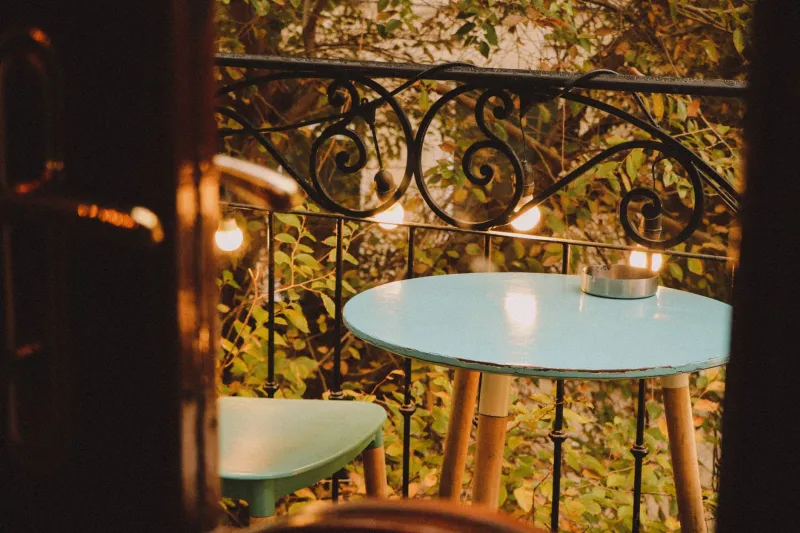
There is a particular sort of November evening in this country where the balcony goes dark at about ten past four and stays that way. The pots are sulking, the compost is wet, and the whole little outdoor room you spent all summer fussing over becomes a shape you glimpse through the kitchen window and feel vaguely guilty about. That is exactly the moment a cheap string of solar fairy lights stops being frivolous and starts being a genuinely useful bit of kit.
Let's be clear about what we're doing here and what we're not. We are not pretending. A solar string does not warm a plant, does not extend the growing season, does not stop a fuchsia turning to mush in a frost. It is not gardening. It is something slightly different, and arguably just as important: it is the thing that keeps you going out there.
The honest bit: what glow can and can't do
A lot of small-space growing advice quietly implies that if you're not maximising yield, you're wasting your time. On a two-metre balcony in mid-November there's very little to maximise. The lettuce is done, the tomatoes are a memory, and the most productive thing you can do is occasionally look at your pots and remember they're alive.
Lights help with that. If the balcony is lit, you notice the rosemary is still standing. You spot the slug damage on the winter pansies. You remember to water the pots under the eaves. That's the whole trick — a bit of glow makes the space used, and used spaces get cared for.
What the lights genuinely don't do: they don't add meaningful heat (LEDs run cool, and a string of 100 tiny bulbs throws out roughly the warmth of a hopeful thought), they don't substitute for daylight on a windowsill, and they don't make a tender plant hardy. Anyone selling you otherwise is having you on.
Getting the panel to behave in a British November
The single most common reason solar fairy lights disappoint is not the lights. It's the panel. In late autumn, daylight is thin, low, and often grey, and a panel tucked behind a pot or angled at the sky from a north-facing rail will produce almost nothing.
So: put the panel where the weak sun actually lands. On a UK balcony in November, that generally means south, south-east or south-west, and it means getting it up high enough to clear the shadow of the railing and any neighbouring building. Angle it towards the sky at roughly 40 to 60 degrees rather than lying flat — flat panels collect water and grime and see far less of a low winter sun.
If you're lucky enough to have a bit of wall, fix the panel to it with the supplied bracket or a couple of weatherproof cable ties. If not, a small clamp on the top rail works well. Wipe the glass every couple of weeks; a film of city grime can knock the output noticeably, and it's a two-second job with a damp cloth.
And set expectations. A decent little panel might give you four to six hours of glow on a bright day and rather fewer after three days of drizzle. That's fine. Buy a string with a built-in battery and an eight-hour timer, charge it somewhere brighter if you can, and accept that some evenings it'll be a bit dim. It's a fairy light, not a streetlamp.
Draping without making a mess
The temptation is to wind the string round everything and hope. Resist slightly. A few principles keep it looking deliberate rather than tangled:
- Pick two or three lines, not twelve. One run along the top rail, one looped through a trellis or a couple of hooks on the wall, and maybe one small cluster in a lantern. That reads as designed. Everything at once reads as a teenager's bedroom.
- Follow something. Railings, a bamboo cane frame, the outline of a window box, a length of twine strung between two sticky hooks. Lights on a wire always look better than lights on nothing.
- Keep the low stuff dry-ish. Bulbs sitting in a puddle of compost or a pool of water on a saucer will corrode fast. Loop the string a good 10cm above soil level.
- Think about where you sit. Nobody wants to be dazzled by a bulb at eye level while holding a mug of tea. Aim the glow at the pots, not at your face.
Fixings, cables and the soggy truth about weather
UK balconies are a brutal test environment: wind, sideways rain, condensation, salt if you're near the coast. A few boring precautions save you a February rewiring job.
Check the IP rating before you buy. IP44 is the sensible minimum for outdoor use; IP65 is better if the lights are going to be genuinely exposed. Anything unrated is for indoor sills only.
For fixings, clear adhesive cable clips work on smooth painted walls and glass but hate textured brick and cold, damp surfaces — warm the surface first, press firmly, and give them 24 hours before loading. Suction cups are a gamble in the cold; they pop off in a frost. Small stainless hooks, screw-in eyelets, or zip ties around a railing are far more reliable. Use black ties and snip the tails flush and nobody will notice them.
Keep the small connector block between panel and lights off the ground — a hook or a clip 20cm up does the job. And if you're running any mains extension out there (some hybrid sets allow it), that's the one bit that needs a proper outdoor-rated box and a drip loop. Don't improvise with a sandwich bag.
A word on wildlife and neighbours
Warm-white or amber strings are gentler on night-flying insects than bright cool white, and they're kinder to the neighbours' bedroom windows too. If you're lit up like a runway until midnight, expect a note through the door. A timer set for four hours from dusk is the polite option, and it saves battery anyway.
One more: according to the RSPB, artificial light can disrupt birds' routines, so keep strings away from any hedge or feeder area you're actively trying to make wildlife-friendly. A soft glow around the seating corner is lovely. A floodlit fat-ball station is less so.
The point of it, really
There's a quiet snobbery in gardening that treats decoration as a slightly embarrassing cousin of cultivation. I don't buy it. The balcony in November is a small, cold, grey rectangle, and anything that makes you open the door, stand in it for five minutes and check on your plants is doing real work.
The lights are a cheat, in a sense — a shortcut to cheerfulness rather than a slow-grown one. But they're an honest cheat. They don't claim to heat anything. They just make a small space feel inhabited at the exact time of year when it's easiest to abandon it, and abandoned balconies are the ones that die.
So string them up, tuck the panel where the sun actually goes, and go and stand out there with a cup of tea at half four. That's the whole harvest, and it's a good one.